News

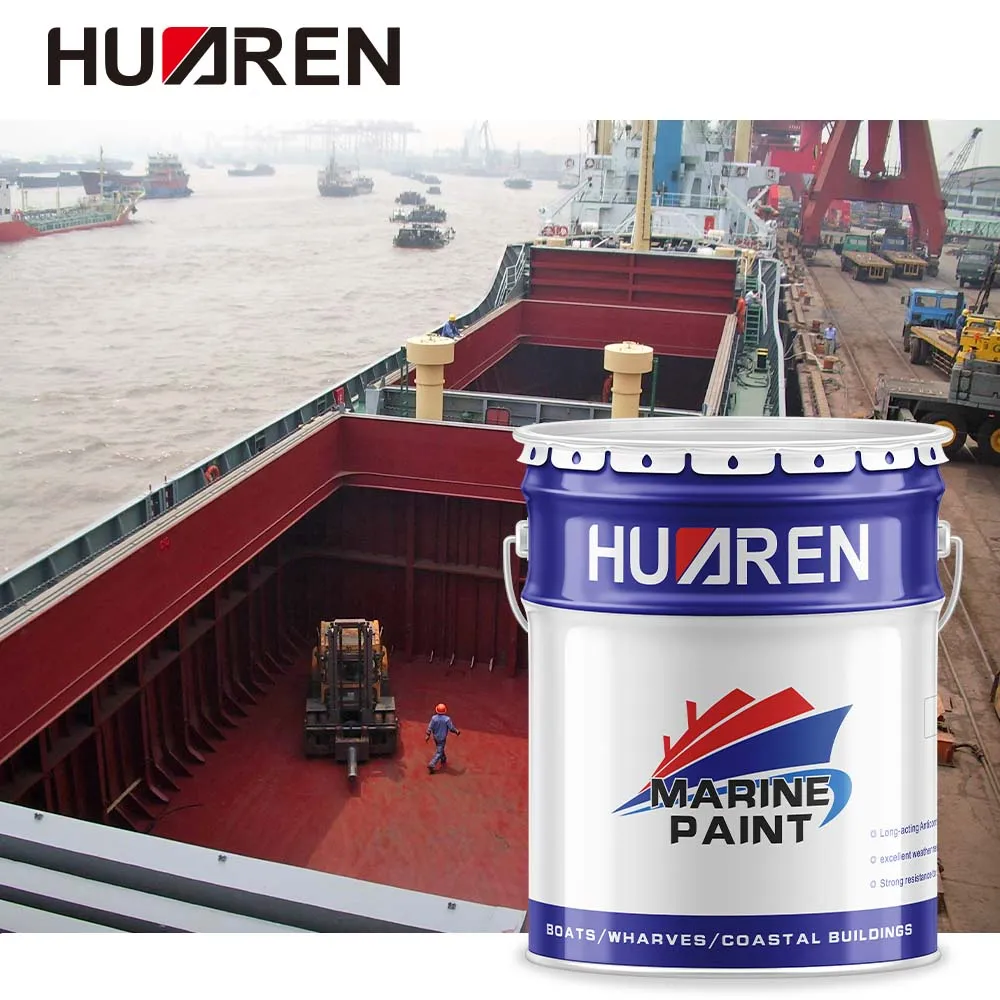
  • What chemicals are contained in self-polishing antifouling paint?
    05-19/2025
    Chemicals contained in self polishing antifouling paint: 1. Polymer matrix 2. Antifouling active substances 3. Fillers and additives 4. Solvents The polymer matrix is ​​the main component of self-polishing antifouling paint and directly determines the dissolution behavior and durability of the coating.
  • Do self etching primer and epoxy primer have the same function?
    03-11/2025
    That self etching primer and epoxy primer have their own emphasis on functions and performance, so they cannot simply replace each other. Self etching primer is more suitable for scenes with improved adhesion, while epoxy primer performs well in environments that require durable protection.
  • Can antifouling ship coatings be used in fresh water?
    02-24/2025
    In freshwater, the aging rate of coatings may be faster due to the fluidity and temperature changes of the water body. Especially for self-polishing coatings, the wear rate of coatings will be faster in freshwater environments with faster water flow, resulting in premature attenuation of antifouling effects.
  • Can ship paint prevent marine organisms from attaching?
    02-10/2025
    Traditional paints are usually unable to effectively deal with the attachment of marine organisms, while modern antifouling paints use special formulas and technologies to prevent the attachment of organisms while maintaining the smoothness of the bottom of the ship, reducing water resistance and improving navigation efficiency.
  • Do fiberglass boats need antifouling paint?
    01-28/2025
    If the ship is docked in a port, swamp or near a marine biological breeding area for a long time, the hull may be at risk of a large number of marine organisms attaching. In this case, antifouling paint can effectively prevent the attachment of marine organisms, reduce the underwater friction of the hull, and avoid the formation of biofilms.
  • Hard Antifouling Paint vs. Self-polishing Antifouling Paint: What’s the Difference?
    01-23/2025
    Self-polishing antifouling paint is a special coating that gradually polishes and releases antifouling active substances through chemical reactions with seawater, thereby preventing the attachment of marine organisms. Unlike hard antifouling paint, self-polishing antifouling paint will gradually consume during use, keeping the surface of the hull smooth and clean.
  • How to judge whether antifouling ship coatings need to be replaced?
    01-10/2025
    The color change usually means that the coating has undergone a chemical reaction and may be a sign of aging. The change in color does not necessarily affect the antifouling effect immediately, but if the color of the coating is found to be significantly faded or uneven, it may be that the coating has been damaged and the antifouling effect has begun to decline.
  • What is antifouling paint? Is antifouling paint a bottom paint?
    12-12/2024
    The main function of antifouling paint is to prevent marine organisms from attaching to the underwater part of the hull, thereby reducing hull resistance, reducing fuel consumption, and extending the life of the hull.The main function of primer is to enhance the adhesion between the substrate
  • Do I need antifouling paint on my boat?
    10-01/2024
    ● Leisure yachts: Usually used in freshwater or coastal waters, antifouling paint can effectively keep the bottom of the ship clean and improve navigation efficiency. ● Commercial ships and fishing boats: Long-term sailing at sea, antifouling paint is a necessity, which can significantly reduce maintenance costs and fuel consumption. ● Sailing and rowing boats: The speed requirement is high. Antifouling paint can reduce the resistance of the bottom of the ship and increase the speed.
  • What types of ship antifouling paint are there?
    09-09/2024
    The main types of ship antifouling paints are: 1. Conventional Antifouling Paints 2. Self-Polishing Copolymer Paints (SPC) 3. High-Performance Antifouling Paints 4. Non Toxic Antifouling Paints 5. Hydrophilic Antifouling Paints.

Get the latest price? We will reply as soon as possible (within 2 hours)